If you visit Bali, you shouldn’t miss Balinese food. It’s known for its rich flavors, especially from the traditional base genep spice mix that gives each dish its unique taste. From slow-cooked Ayam Betutu to the iconic Babi Guling, every meal offers a truly memorable culinary experience.
In this guide, you’ll find simple explanations of local dishes along with recommendations on what to try. Here is your complete guide to Balinese food for travelers exploring Bali.
What Balinese Food Actually Tastes Like
Balinese cuisine is known for its bold and aromatic flavors, created from a balance of savory, slightly sweet, spicy, and fresh sour elements. The generous use of fresh herbs and spices gives each dish a deep yet balanced taste, making every bite feel rich and satisfying.
The Spice Paste That Defines Everything
At the heart of many Balinese dishes is base genep, a traditional spice paste made from a blend of ingredients like galangal, turmeric, ginger, and other local spices. This mixture is more than just seasoning, it forms the base of flavor that gives each dish its distinctive aroma and character, something you can often find freshly prepared in Bali’s markets.
Spiced, Not Always Spicy
While many people assume authentic Balinese food is always spicy, it’s actually more about layers of flavor. Chili can usually be adjusted, but the real focus is on aromatic ingredients like lemongrass, bay leaves, and shrimp paste, which create depth without overwhelming heat.
What Makes It Different
Compared to other Indonesian cuisines, Balinese cooking is shaped by local traditions and cultural influences. Ingredients like pork are more commonly used, and some recipes are tied to ceremonies or special occasions.
The textures also tend to feel fresher and lighter, as seen in dishes like sambal matah or lawar, which are very different from richer, coconut-based dishes found in other regions.
The Foundation of Every Balinese Plate
Every Balinese meal is created as a complete experience, where each element works together to balance flavor, texture, and aroma. This is what makes food in Bali feel so layered and satisfying, even in the simplest dishes.
Rice Is Never Just a Side Dish
Rice is never just a side dish in Bali. It’s the center of the plate and holds cultural meaning, symbolizing prosperity and daily blessings. The quality and softness of the rice often shape the overall taste of the meal, which is why it plays such an important role in traditional Balinese food.
Sambal Matah and the Condiments That Complete Each Meal
One of the must-try condiments when thinking about what to eat in Bali is sambal matah. Made from fresh shallots, lemongrass, chili, and coconut oil, it adds a bright and refreshing contrast to richer dishes.
It’s usually served alongside sides like peanuts or lawar, helping balance flavors and keep each bite interesting.
Traditional Cooking Techniques
Balinese cooking often uses natural methods that bring out deeper flavors. Ingredients are wrapped in banana leaves for a subtle aroma, while coconut husks and open fire cooking add a smoky taste.
This slow and traditional process is what gives many dishes their distinctive and authentic character.
The Iconic Dishes Every Visitor Should Know
Iconic Balinese food is known for its rich flavors, which come from traditional cooking methods that take time and care. These techniques allow the spices to fully develop, giving each dish a deep and memorable taste.
Babi Guling
One of the most famous dishes in bali cuisine, babi guling is a whole roasted pig filled with a traditional spice mix. It’s known for its crispy skin and tender, flavorful meat, usually served with sides like pork sausage and a light soup.
Bebek and Ayam Betutu
These dishes use duck or chicken that is slowly cooked for hours until the meat becomes very soft and easy to pull apart. The long cooking process helps the spices absorb deeply, creating a rich and aromatic flavor that defines authentic Balinese food.
Sate Lilit
Different from regular satay, sate lilit is made from minced meat mixed with coconut and spices, then wrapped around lemongrass or bamboo sticks. When grilled, the lemongrass adds a fragrant aroma that makes this dish unique.
Lawar
Lawar is a mix of vegetables, grated coconut, and minced meat, all seasoned with traditional spices. It has a slightly crunchy texture and savory taste, and you’ll find both white and red versions depending on the ingredients used. You can often find this dish in local spots, including places like the Sanur night market.
Balinese Mixed Rice
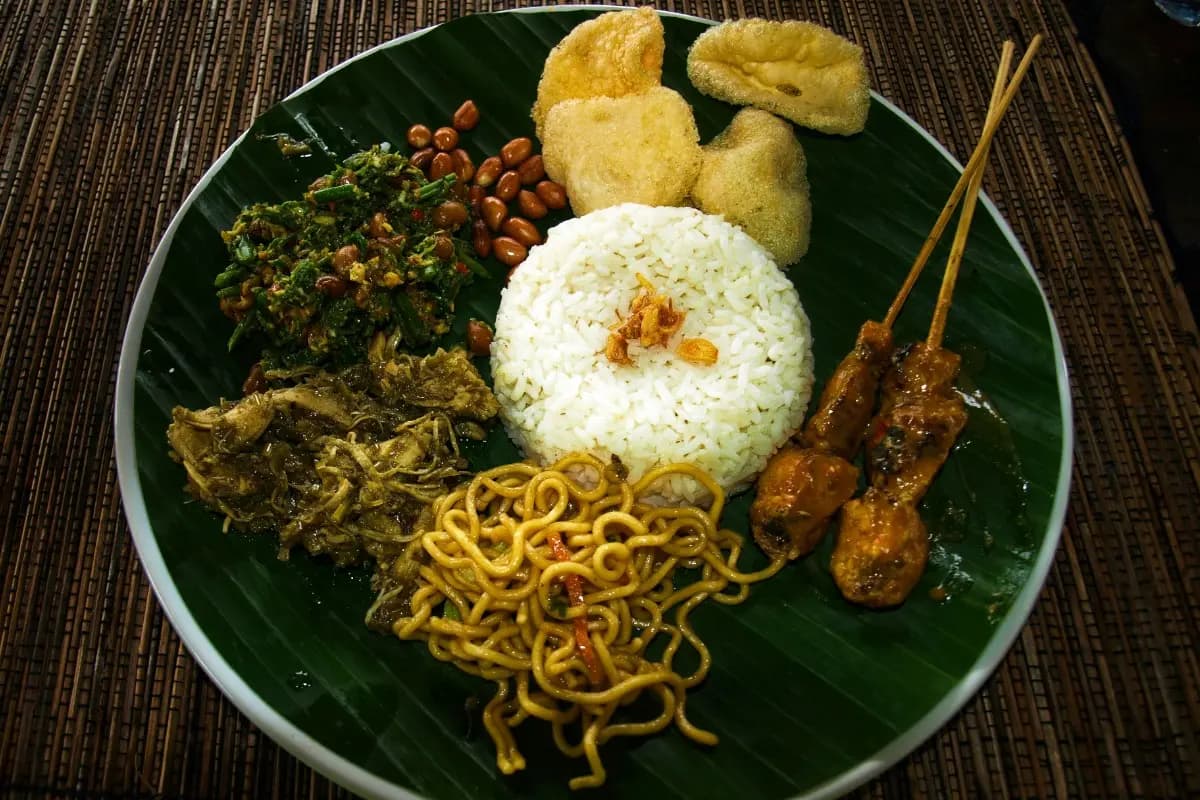
This is a complete meal that brings together different elements of Bali food on one plate. It usually includes rice served with small portions of dishes like sate lilit, shredded chicken, vegetables, peanuts, and sambal matah, giving you a little bit of everything in one serving.
Beyond the Famous Five
Beyond the well-known main dishes, Bali also has plenty of everyday meals and traditional snacks that feel simple but are still full of authentic flavor. These are the kinds of dishes you’ll often come across when learning how to order food in Bali, especially in local restaurants or small warungs.
Nasi Goreng and Mie Goreng
Although popular across Indonesia, the Balinese version has its own touch, often using coconut oil and local spices that make it more fragrant. It’s an easy and familiar choice, usually served with a fried egg, crackers, and sometimes chicken satay.
Urab
Urab is a mix of boiled vegetables like spinach, bean sprouts, and long beans, combined with seasoned grated coconut. It has a fresh, slightly crunchy texture and works well as a lighter option, making it part of what many consider Balinese vegetarian food.
Ikan Bakar
Grilled fish is a must-try, especially around Jimbaran Beach, where fresh seafood is cooked over coconut husk charcoal. The fish is brushed with traditional spices, giving it a smoky and slightly sweet flavor. It’s easy to see why this area is known for some of the best seafood restaurants in Bali.
Tipat Cantok and Serombotan
Tipat cantok is made with sliced rice cakes and vegetables topped with a rich peanut sauce mixed with kencur and chili. Serombotan, a specialty from Klungkung, combines different vegetables with spicy peanut sauce and toasted coconut, creating a bold and savory taste.
Jaje Bali
Jaje Bali refers to a variety of traditional sweets made from rice flour, sticky rice, coconut, and palm sugar. Snacks like laklak or pisang rai are slightly sweet and soft, making them a perfect way to end a meal.
Balinese Food by Time of Day
Bali’s food scene follows the natural flow of the day, with different dishes enjoyed from morning to evening based on local habits and daily routines.
Morning: Markets, Porridge, and Nasi Jinggo
The day often begins at traditional markets, where locals look for something quick and filling. Warm Balinese porridge with yellow sauce and vegetables is a popular choice, along with nasi jinggo, a small portion of rice wrapped in banana leaves with shredded chicken and sambal. These meals are simple, light, and easy to enjoy on the go.
Midday: Warung and Eating Like a Local
Lunchtime is best spent at a warung, where fresh dishes are prepared daily. One of the most common options is nasi campur, where you can choose different side dishes to suit your taste.
It’s a good idea to arrive before 1 PM so you get the best selection while everything is still fresh and warm.
Evening: Night Markets, Seafood, and Sunset Dining
In the evening, the atmosphere becomes more vibrant and social. Night markets serve a variety of affordable snacks and local favorites in a relaxed setting.
Along the coast, areas like Jimbaran are known for grilled seafood by the beach, while other restaurants offer a mix of local and international dishes paired with beautiful sunset views.
What to Eat Based on Your Dietary Situation
For Vegetarians and Vegans
Bali is very friendly for plant-based eaters, with dishes built around tempeh, tofu, and fresh vegetables. You can enjoy options like tipat cantok, gado-gado, or urab without meat. If you’re vegan, just ask for your meal without shrimp paste or egg.
For Travelers Avoiding Pork
Although dishes like babi guling are popular, there are plenty of pork-free options available. Meals like ayam betutu, bebek goreng, and chicken sate lilit offer the same rich flavors using traditional spices. Many places also clearly label their food as halal or no pork, making it easier to choose.
For Those Sensitive to Spice
If you prefer milder flavors, it’s best not to mix sambal directly into your rice. You can go for dishes like ayam pelalah without sambal, chicken satay with sweet peanut sauce, or tum ayam, which is gently steamed and more aromatic than spicy.
For Budget Travelers
If you’re traveling on a budget, nasi jinggo is a great option, usually costing under IDR 10,000 per portion. You can also find affordable meals at local warungs, where a plate of rice with a couple of side dishes typically costs around IDR 20,000 to IDR 25,000.
How to Navigate a Warung as a First-Time Visitor
Warungs are at the heart of Balinese food culture, offering a simple and authentic dining experience at local prices. Knowing a few basics can help you feel more comfortable and make your visit more enjoyable.
How to Enter, Order, and Pay
- Enter and sit: Just walk in and choose any available table. Warungs are casual, so there’s usually no host to guide you.
- How to order: Head to the food display and take a look at the available dishes. You can point to what you like for a nasi campur plate or order directly from the menu if there is one.
- Payment: You usually pay after eating. Just mention what you had or show your plate, and be ready with cash since many warungs don’t accept cards.
Helpful Local Phrases
Using a few simple words can make your experience more personal:
- “Suksma” means thank you
- “Mewali” is a friendly reply
- “Less spicy” if you prefer milder food
- “Takeaway” if you want your meal to go
Warung vs. Tourist Restaurant
At a warung, you get a more homey atmosphere, lower prices, and a closer connection to local life. The setting is simple, often with fans and shared tables, and the focus is on the food itself.
In tourist restaurants, the experience is more polished. You’ll find air conditioning, stylish interiors, and English menus, but prices are higher, and the flavors are often adjusted to suit a wider range of tastes.
Drinks and Beverages That Belong With Balinese Food
Balinese Coffee and Traditional Tea
Balinese coffee is known for its fine texture and strong, earthy flavor. It’s usually served as kopi tubruk, where the ground coffee is brewed in a glass with sugar, creating a rich and slightly bitter taste. For tea, locals often enjoy it hot or iced with a light jasmine aroma, which works well as a refreshing finish after a heavy meal.
Loloh
Loloh is a traditional herbal drink that’s both refreshing and known for its health benefits. One of the most popular types is loloh cemcem, made from leaf extract with a unique mix of sour, sweet, slightly spicy, and salty flavors. It’s commonly enjoyed to help digestion and cool the body after eating.
Es Daluman and Tropical Fruits
Es daluman is a simple dessert drink made with green grass jelly, coconut milk, and liquid palm sugar, usually served with ice. Its smooth texture and mild sweetness make it a great way to balance spicy food.
For something more natural, fresh young coconut is a favorite, especially by the beach. You’ll also find plenty of tropical fruit juices like mango, soursop, and dragon fruit, offering a fresh and hydrating option.
Balinese Food at the Beach
Jimbaran Bay and the Seafood Grill Tradition
Dinner in Jimbaran is all about fresh seafood grilled over coconut husks, which gives it a rich, smoky flavor. A typical meal comes with rice, plecing kangkung, and a selection of sambal, creating a relaxed and shared dining experience right on the beach, especially around sunset.
Beach Club Menus with a Local Touch
Many modern beach clubs now bring Balinese flavors into their dishes in a more refined way. You might find menu items like snapper crudo with kaffir lime or grilled octopus with traditional spices. It’s a way to enjoy local taste in a more modern and elevated style.
Finding Authentic Coastal Food
If you’re looking for something more local and affordable, try small food stalls near fishing villages or harbors, such as Kedonganan or Sanur. Places that focus on just one or two dishes, like fish head soup or fried fish, are usually a good sign of authentic flavor and a popular choice among locals.
The Cultural Meaning Behind What You Are Eating
In Bali, food is more than just something to eat. It’s closely connected to daily life, nature, and spiritual beliefs. Every ingredient and the way it’s prepared often carries meaning that reflects the local way of life.
Food as Offering
Many dishes are rooted in the tradition of offerings. Concepts like gebogan and banten, which are arrangements of fruits and snacks, show that food is first given as a symbol of gratitude before being enjoyed. Because of this, meals are often seen as something that brings positive energy and blessings.
From Ceremony to Everyday Dining
Some dishes that are now easy to find in restaurants, like babi guling and bebek betutu, were originally made only for ceremonies or special rituals. Today, these dishes are shared more widely, showing how Balinese culture opens its traditions to visitors while still respecting their original meaning.
Why Balinese Rice Tastes Different
The unique taste of rice in Bali comes from the subak system, a traditional irrigation method recognized by UNESCO.
It’s not just about managing water for the rice fields, but also about maintaining balance through rituals and community cooperation. This connection between farmers, land, and tradition is believed to give the rice its distinctive flavor.
Practical Tips Before You Eat
How to Avoid Bali Belly Without Missing the Best Food
Choose a warung with a high customer turnover so that the food is always freshly cooked and hot.
Avoid drinking tap water (use bottled water for drinking and brushing your teeth), and ensure that raw vegetables, such as Sambal Matah, come from a place with visibly good hygiene standards.
What Prices to Expect and Where
- Pasar & Nasi Jinggo: IDR 5,000 – IDR 15,000 per portion (very economical).
- Warung Lokal: IDR 20,000 – IDR 45,000 for a portion of mixed rice with a drink.
- Mid-Range & Casual Restaurants: IDR 60,000 – IDR 150,000 per person.
- Beach Clubs & Fine Dining: Above IDR 250,000 per person, usually excluding tax and service.
Cooking Classes as a Way to Understand Before You Taste
Attending a cooking class provides in-depth insight into how to prepare Base Genep from scratch and the techniques used in traditional cooking. This experience helps you appreciate the complexity behind each dish, so that when you taste it later, you can recognize each layer of spice flavor.
Eating in Bali Leaves Something Behind
Experiencing Balinese food is one of the best ways to understand Bali, from its rich flavors and local traditions to the warmth of everyday life found in every dish. Each meal tells a story, making food an essential part of any journey across the island.
For more inspiration on where to eat, stay, and explore, visit the Tropical Temptation website as your guide to discovering Bali in style. It’s the perfect place to plan your next island experience beyond the plate.